Platform

DiagnovisAI analyses each study and prepares a structured draft report. A radiologist edits and signs it. Confirmed time-sensitive findings then move to the people who need to act.

How it works

DiagnovisAI is not a PACS and does not replace one. It reads from the systems you run and returns the draft into your reporting workflow. No new imaging hardware, no migration. It works the same whether the radiologist is down the corridor or in another city.

01

AI analysis

Findings are detected, quantified, localised and ranked by urgency.
02

Radiologist review

A radiologist reads the images. Clinical interpretation remains human-led.

03

Structured reporting

The radiologist edits the structured draft and signs. Nothing is issued before that.

04

Clinical communication

Confirmed time-sensitive findings move through the notification and escalation pathway the hospital sets.

05

Action

Help the right people move the patient forward.
Triage

The worklist reflects urgency,
not arrival order.

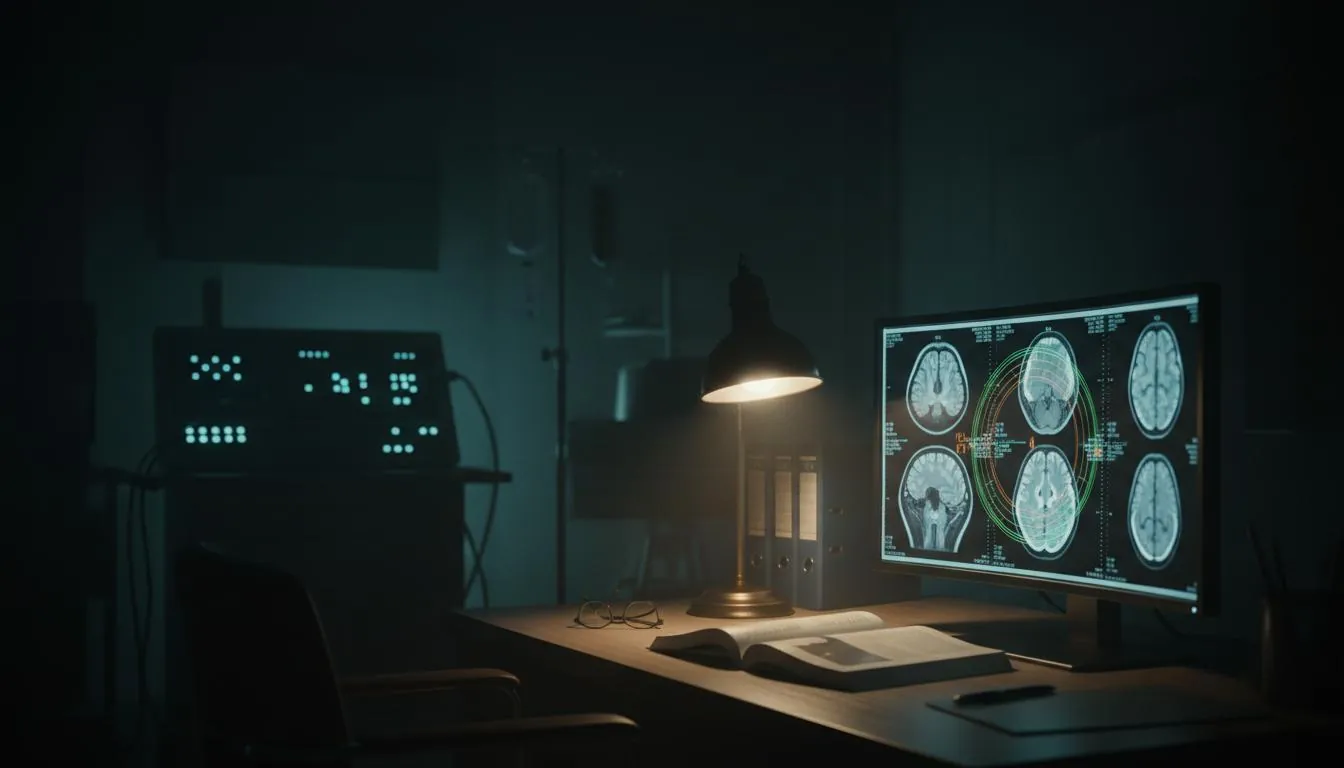
A routine follow-up and an expanding bleed should not wait in the same line. The worklist brings time-sensitive studies forward.

Ranked on arrivalEvery study is analysed as it is received. Those carrying findings that cannot wait are surfaced to the top of the list rather than taking their place in the queue.
Pre-declared findingsWhat counts as urgent is fixed in advance rather than decided case by case. On brain CT that includes intracranial haemorrhage, large-territory infarct and mass effect with midline shift. On chest radiography it includes pneumothorax, and consolidation or tuberculosis-pattern opacity. There are others.
Escalation stays yoursA flag routes through the escalation procedure your department already operates. DiagnovisAI raises the study's position in the list; it does not contact anyone, and it does not act on the flag itself.
Nothing is droppedRe-ordering is not filtering. Every study is still read and still signed. Triage changes when a study is read, never whether it is.
Measurement

Measurements that are specific and checkable.

Where a finding can be measured, it is. Each figure carries its location and the region it came from, and stays editable until sign-off.

Communication

Findings that reach someone.

Confirmed time-sensitive findings move through the notification and follow-up pathway the hospital sets, instead of waiting in a system.

Who It's For

Built for everyone between the scan and the patient.

For the radiologists who read, the hospitals that report, and the clinical teams who act on what they find.

Hospitals & imaging centresFrom your scanner to your ward, sooner. Use the equipment you own, the radiologists you have and the pathway your team already uses. Urgent studies move forward, and confirmed findings follow the escalation route you set.
RadiologistsDrafts, not verdicts. Review starts from an ordered draft, not a blank page. You read, edit and decide. Nothing reaches a referrer without your sign-off.
Referring clinicians & care teamsFindings that reach you. Confirmed urgent findings come to you through your hospital's escalation route, not buried in a report queue.
Health systemsMore reach per specialist. A shortage this size is not one facility's problem. DiagnovisAI supports distributed reading and routes work by urgency, not arrival.
Modalities

One platform. Multiple modalities.

X-rayHigh-volume imaging. Faster review.
CTComplex studies. Earlier prioritisation.
MRIDetailed imaging. Structured assistance.
Safety & human-in-the-loop

The AI assists.
The radiologist decides.

Clinicians keep responsibility for every clinical decision.
A radiologist reviews every output
Every figure shows where it came from
Every part of the draft is editable
Nothing is issued without the radiologist's signature
Portrait of a clinicianPortrait of a clinician

Imagery is illustrative and does not depict Diagnovis staff, named clinicians, or any clinical partner.

See the full path, from scan to action.